

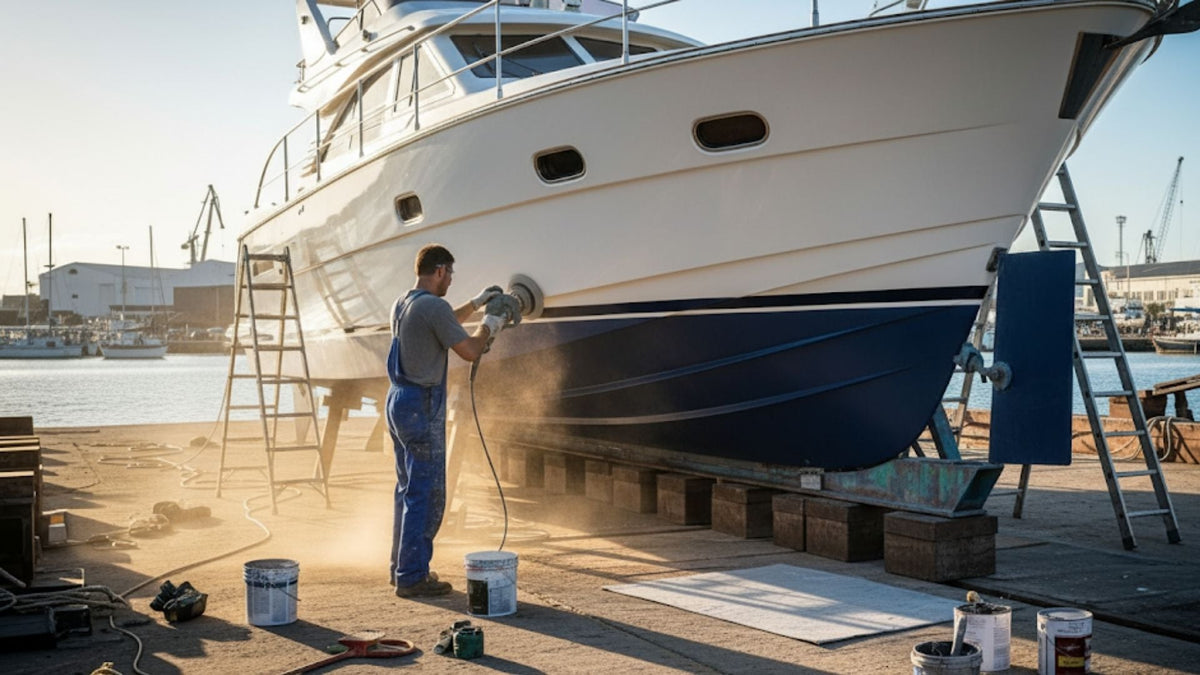
A short, repeatable checklist makes boat maintenance easier to organize. Use it alongside the service instructions for your boat, engines and equipment.

1. Follow the engine's flushing procedure
Use the approved method, duration and water supply for your exact outboard and operating conditions. A built-in freshwater flush port and lower-unit muffs can require different procedures; do not transfer engine-running instructions between them.
A compatible Flushmaster Controller can manage timing and outlet sequencing through approved freshwater ports with the engines off. It does not replace the engine manual's requirements.

2. Look over the propeller and hull
With the engine secured against starting, visually check for new damage, loose items or signs of leaks. Keep clear of sharp propeller edges and use the manufacturer's service procedure for anything beyond inspection. Have structural damage or unusual vibration assessed before continuing to use the boat.

3. Inspect batteries and connections
Check for loose connections, damaged cables and corrosion using the battery and boat manufacturers' instructions. Follow their isolation, cleaning and charging procedures rather than treating every battery type the same. Arrange service if you find damage or an uncertain electrical problem.

4. Keep the bilge inspectable
Remove loose debris and test the pump and float switch as directed. Investigate unexpected water, oil or fuel. Keep contaminated bilge water contained for appropriate disposal instead of washing it overboard.
Record what you find so small issues do not disappear from the to-do list. Contact Flushmaster if your question concerns making the flushing connection or timing more convenient.
Share:
How Flushmaster Makes Routine Boat Maintenance a Breeze