

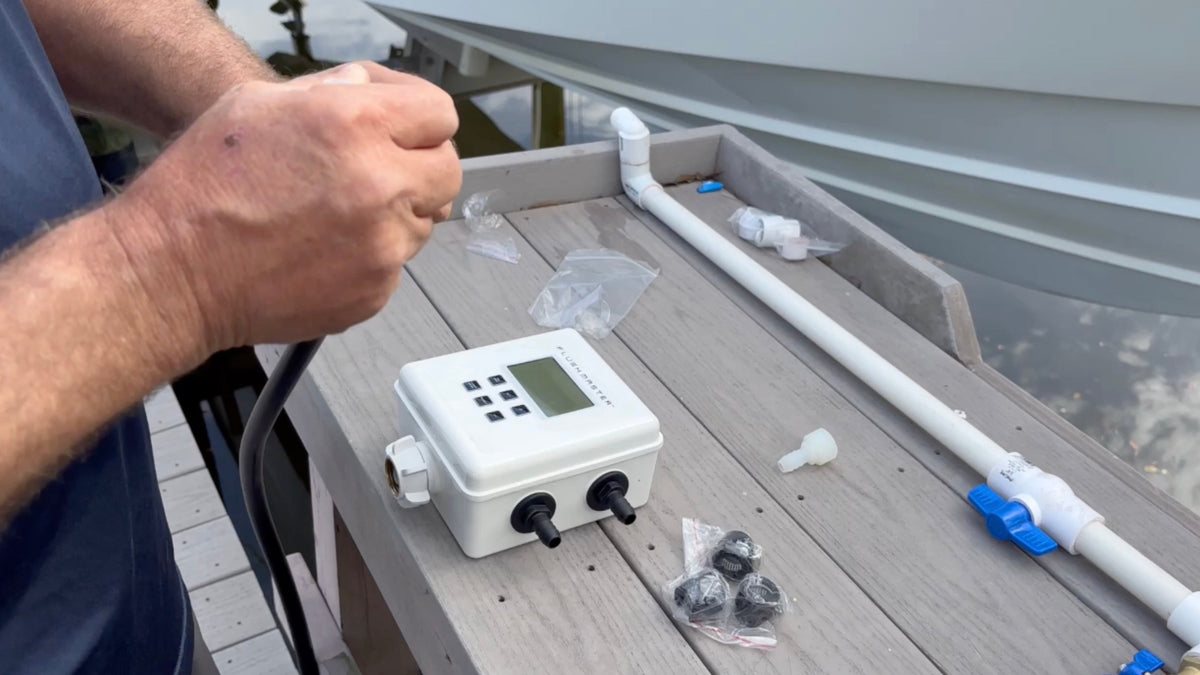
Start a Flushmaster installation by identifying the job you want to simplify. A portable Controller setup is different from modifying dock plumbing or adding permanent engine-flush lines inside a boat.
1. Confirm the equipment and connection
Choose a 2-Outlet Controller for one or two engines, or a 4-Outlet Controller for up to four. Check the contents of your exact package. Quick Connects, mounting accessories and permanent installation plumbing are not automatically included with every Controller.
Confirm the approved freshwater flushing arrangement for each engine. Use Flushmaster with compatible freshwater flush ports and the engines off.
2. Plan the water supply and hose route
The Controller needs an adequate freshwater supply. It controls flow and timing; it does not pump water. Measure the actual inlet and outlet routes, allowing for the boat's position and avoiding kinks, sharp edges and tension.
Keep a separate approved flush route to each engine. Changes to onboard plumbing, engine connections or dock water lines should follow the applicable product instructions and be handled by a qualified installer where needed.
3. Assemble according to the supplied instructions
Install the batteries, connect the supply and outlet hoses, and support the Controller as directed. Follow the specific instructions for each fitting and seal. Do not apply thread tape to every connection: a gasket-sealed hose fitting and a tapered pipe thread do not seal in the same way.
4. Program and test
Select the active outlets and set the duration required by your engine manufacturer. Open the supply and start the cycle as instructed. Check each active route for leaks, hose movement and expected water flow.
Automatic shutoff is not permission to exceed a component's pressure rating or ignore the water supply. Follow the equipment's shutdown, draining and disconnection instructions when finished.
5. Keep the setup serviceable
Leave access for inspecting hoses, seals and connections. Record your settings and inspect the system before use. Restore normal engine connections and caps before operating the boat.
Send us your engine details and setup photos before buying uncertain parts or changing permanent plumbing.
Share:
Spring Tarpon Fishing: Planning for the Silver King
Understanding Red Tide