
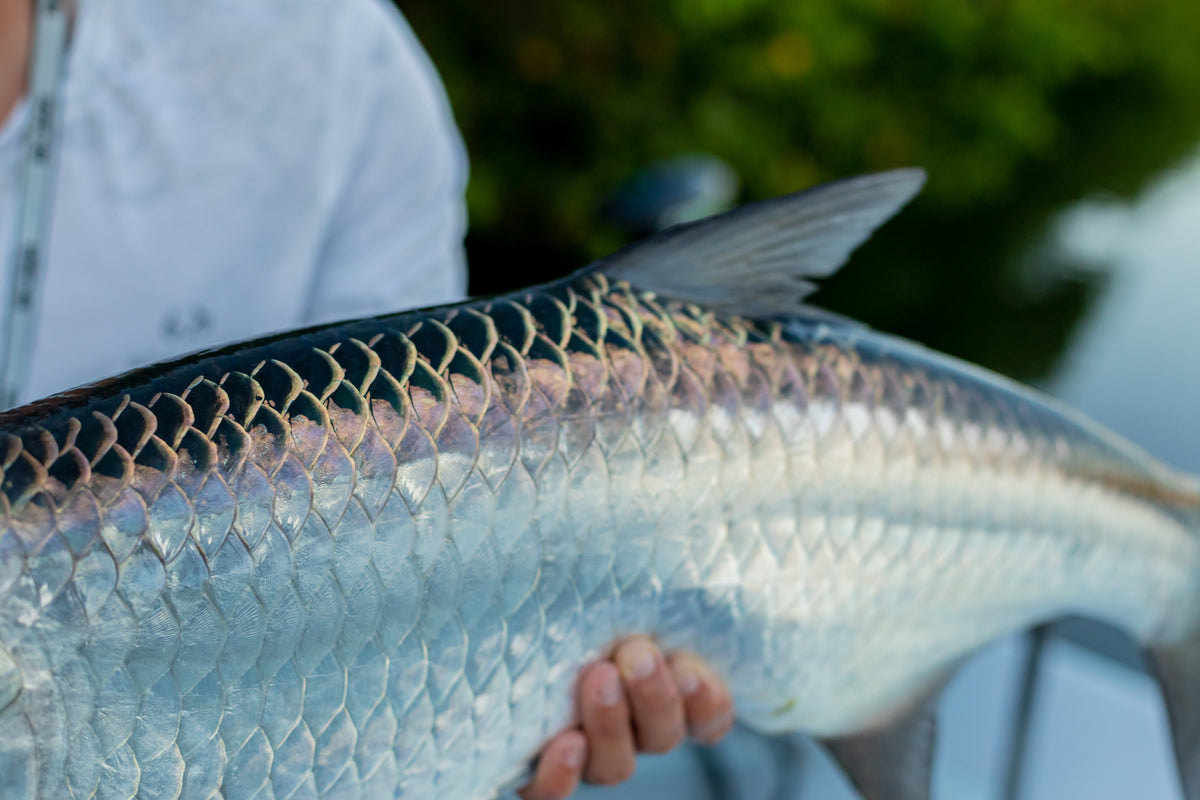
A tarpon's first jump is a memorable part of Florida fishing. Planning the release before the first cast helps make the outing better for the fish as well as the angler.
Plan around conditions
Check local reports, tides and weather instead of relying on a fixed arrival date or a guaranteed location. Give other boats room and keep clear of navigation channels and restricted areas. A local guide can help match the approach to current conditions.
Use tackle suited to the fish
Choose tackle strong enough to avoid an unnecessarily prolonged fight. Hook choice, leader and line should fit the bait, location and current regulations; a single tackle recipe does not suit every situation.
Know the Florida rules
Florida's tarpon fishery is catch-and-release, with a limited record-pursuit exception. Tarpon over 40 inches must remain in the water except under that exception. Check FWC's current tarpon rules before fishing, including any gear restrictions for Boca Grande Pass.
Make the release the priority
Keep the fish and its gills in the water, minimize handling and have the camera ready before bringing the fish alongside. Do not lift a large tarpon into the boat for a photo or touch its gills or eyes. Move to another location if predatory sharks are feeding around hooked fish.
FWC also advises against targeting tarpon from bridges or piers where a large fish cannot be handled and released properly. Read FWC's handling guidance when planning the outing.
Finish with the boat's normal routine
After the trip, follow your outboard's freshwater flushing instructions. A compatible Flushmaster Controller can help manage timing and outlet switching, while each engine still receives the procedure and duration it requires.
Explore Controller options if managing multiple engines is the part you want to simplify.
Share:
4 Myths About Flushing Outboard Motors
Flushmaster Installation Guide