
Saltwater boating makes the end-of-day freshwater flush a useful habit. Follow your outboard manufacturer's instructions so the method, duration and engine position suit the engine you actually own.

Rinse, inspect and maintain
Flushing helps rinse salt and loose material from the cooling-water route served by the approved procedure. It does not reverse existing corrosion, remove every deposit or replace scheduled service.
Inspect the connection, seals and hose route as you set up. Persistent leaks, cooling warnings or abnormal flow need investigation rather than a longer unattended flush.

Keep the setup convenient
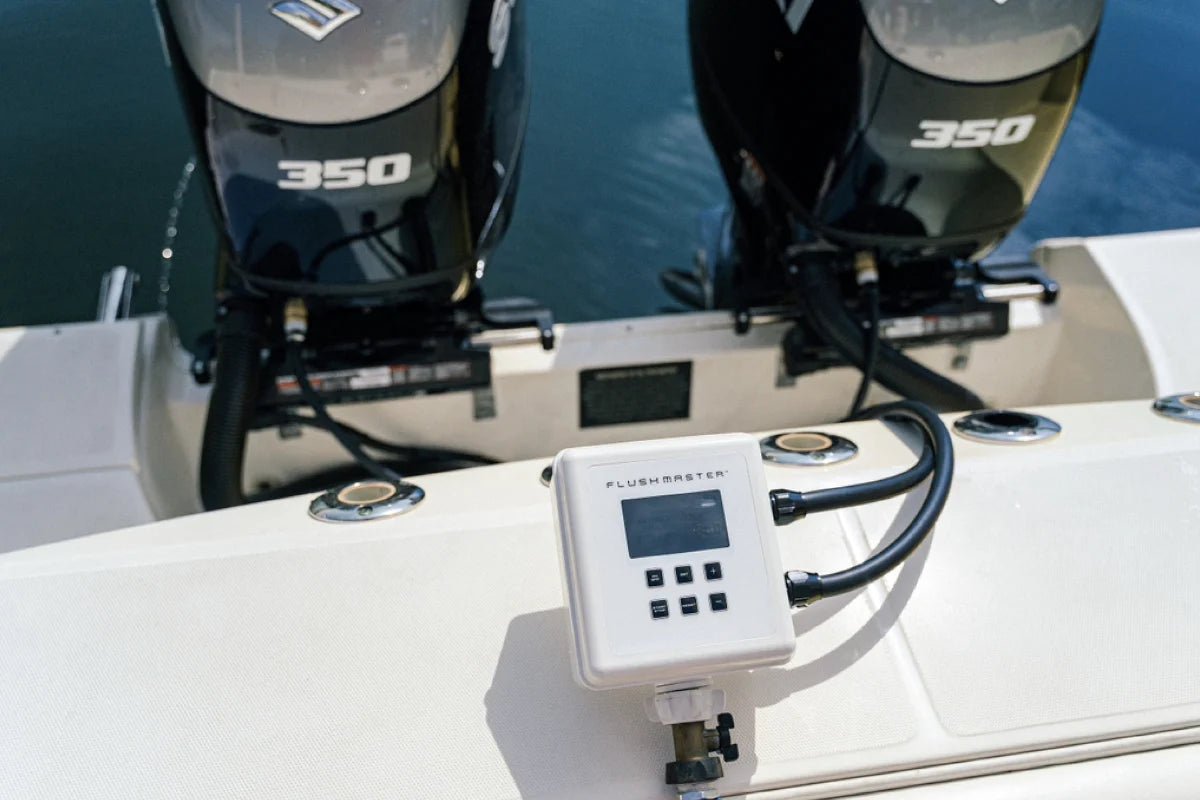
If timing multiple engines is the awkward part, a Flushmaster Controller can run the selected outlets in sequence. Keep the engines off when using it with approved freshwater flush ports. Use the manufacturer's required supply and duration.
If reaching the port is the problem, start by reviewing the connections already on your boat. The useful improvement may be hose attachment or access rather than a complete new system.

Moving between waterways?
Do not treat an ordinary engine flush as proof that a boat is free of invasive organisms. Follow the destination's boat inspection, cleaning, draining and decontamination requirements. Engine maintenance and preventing the transport of aquatic organisms are different jobs.
Get help with your flushing setup and keep the engine manual with your routine maintenance information.
Share:
How to Flush Your Outboard Motor and the Flushmaster Advantage
How to Flush Your Outboard Motor and the Flushmaster Advantage