
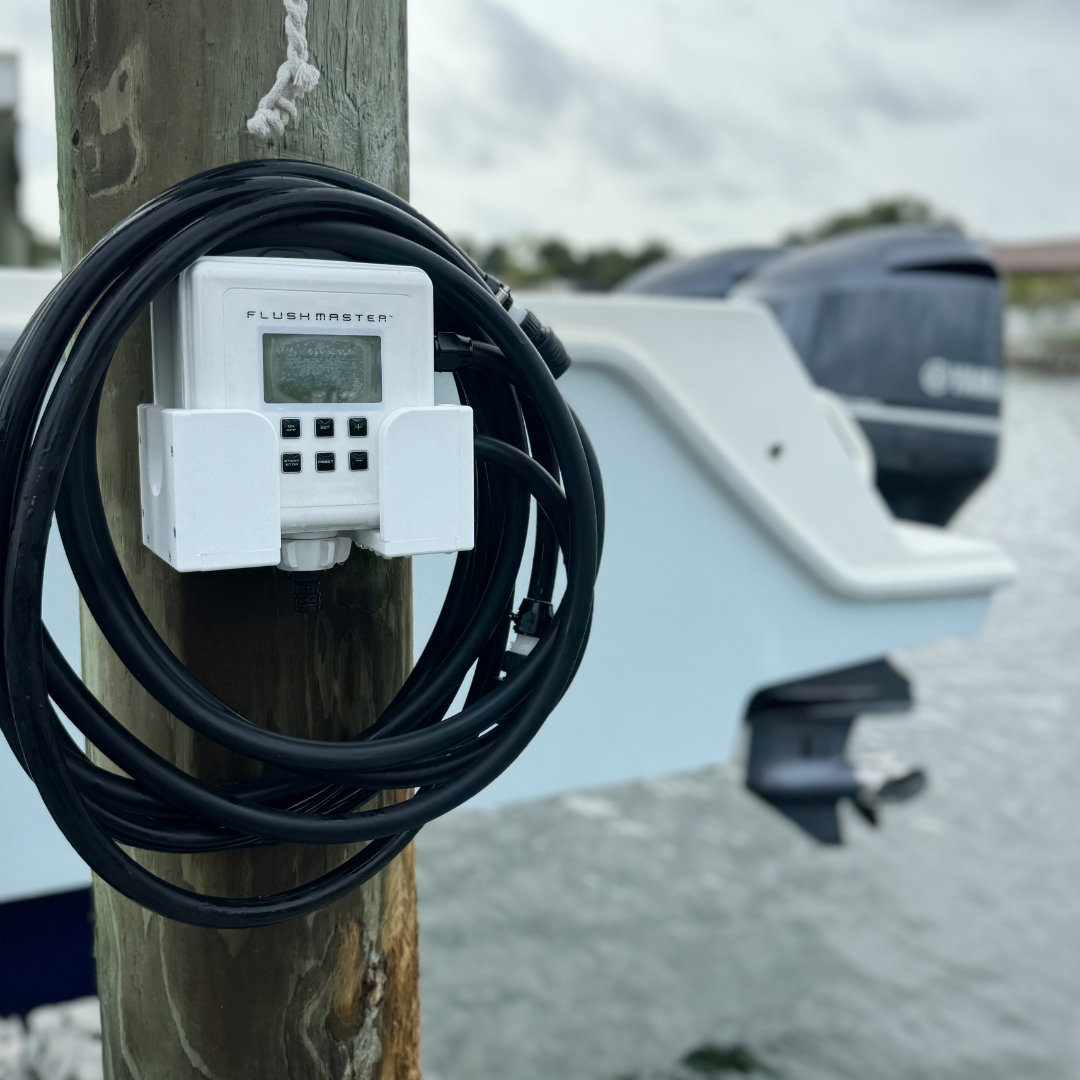
A dock without a nearby hose bib can make flushing awkward. Flushmaster can help organize a portable setup, but it still requires a suitable freshwater supply. Its batteries power the controls and valves; they do not pump water from a container.

Plan the supply first
Identify where fresh water is available and measure the route to the boat. A long supply hose, restrictions and leaks can affect the flow at the engine. Confirm that the complete arrangement meets the engine and Controller requirements.
If no suitable freshwater supply is available, the Controller alone does not solve that limitation.

Choose a supported location
Position the Controller where connections are accessible and hoses will not be pinched or pulled. Check the mounting instructions and surface requirements before using a removable mount.
A housing cradle or compatible removable mount may suit your boat. Confirm the exact product and Controller fit before ordering; no mount is suitable for every surface or location.
Make portable equipment easy to use
Keep suitable hoses and adapters together. Allow for changing boat position and keep hoses clear of walkways and moving parts. Check connections and flow when starting the sequence.
The Controller can time the selected outlets without shore power. Use approved freshwater engine-flush connections with the engines off and follow the manufacturer's required duration.
Tell us where the boat and water source are if you want help planning the arrangement.
Share:
Flushmaster vs. a Y-Splitter: How Sequential Flushing Differs
Heading South for Lobster Mini Season? Don’t Forget Your Flushmaster