
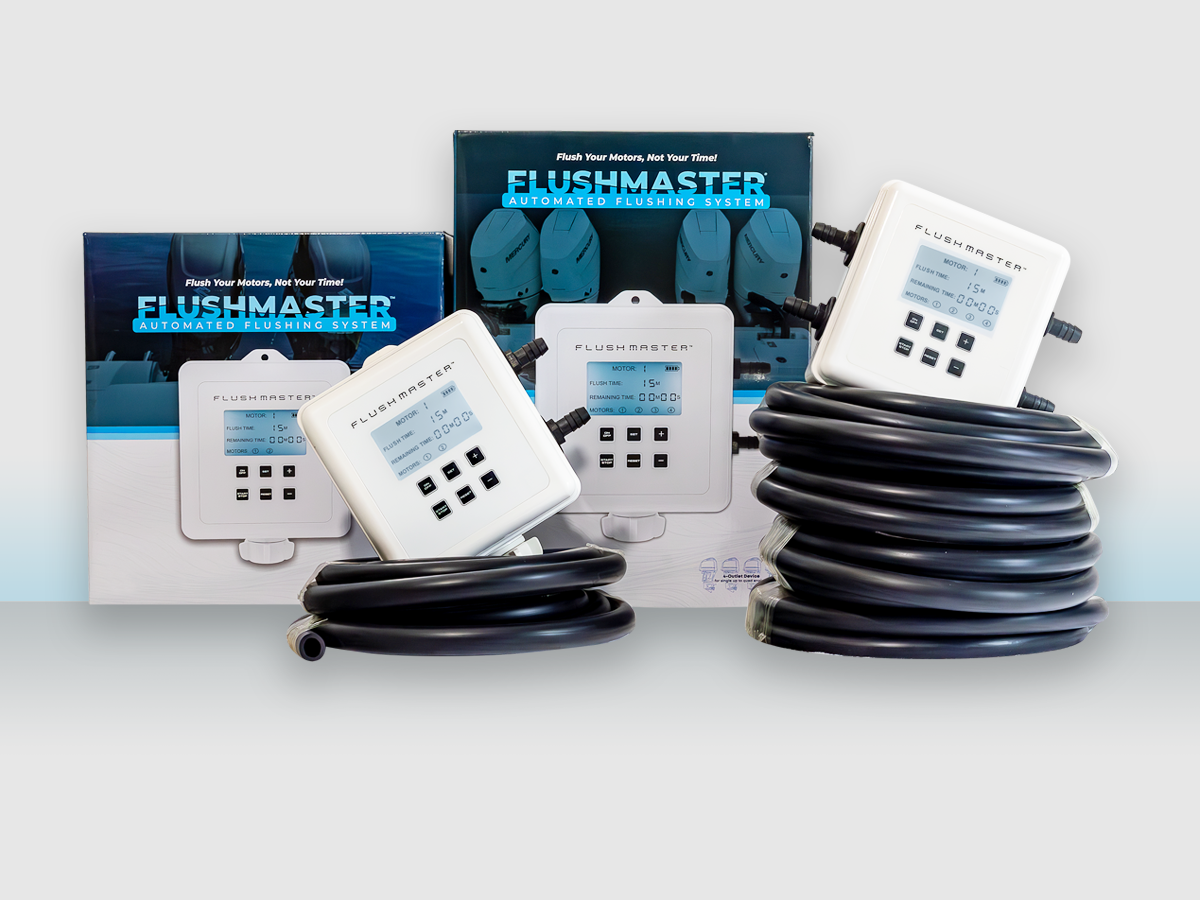
A Y-splitter and a Flushmaster Controller organize water flow differently. The right comparison is how the arrangement meets your engines' supply requirements and how much work it takes to manage.

What happens with a splitter?
Opening two branches shares the available supply. The flow at each engine depends on source capacity, pressure losses, hose length and diameter, fittings and other restrictions. Pressure is not automatically cut in half.
A manual arrangement can be suitable when it meets the engine manufacturer's requirements. Check the actual setup instead of assuming either that every splitter fails or that any two-hose arrangement provides enough water.
What changes with Flushmaster?
The Controller sends water to one selected outlet at a time and handles the programmed sequence. That avoids supplying all selected engines simultaneously. It does not boost pressure or fix an inadequate source or kinked hose.
Compare hands-on time separately
With manual flushing, you manage the timing and connections. Flushmaster can manage the selected outlets and shutoff. The elapsed flushing time still includes each engine's required duration; automatic operation is not a reason to shorten it.
Choose connections that suit the boat
Engine Quick Connects can reduce repeated hose threading. Suitable existing onboard connections may also work. Inspect seals and check flow and leaks at startup whichever connection you choose.
Use Flushmaster with approved freshwater flush ports and the engines off. Follow your engine and equipment instructions throughout the routine.
Compare Controllers or ask about your supply and engine count.
Share:
Flushmaster Quick Connects: What Makes Them Different
Using Flushmaster at a Dock Without a Nearby Water Hookup